Spurred by an underserved market, entrepreneurs are offering personalized service to women seeking stylish clothing in larger sizes.
from neb biz feed 1 http://ift.tt/2nU1SMN
via Nebula Biz Local Loans
Thursday, February 8, 2018

What to Do When You Veer From Your Focus in Your Small Biz
If you lived during the time of Christopher Columbus, veering off course when sailing across the uncharted seas could have serious negative consequences—or it could have led you to amazing new discoveries. But when you veer away from what should be the focus of your small business, it can make it harder to reach your original goals and cause you to lose site of the original mission you had for your company.
And yet, it’s happened to us all at one point or another, hasn’t it? I know it has for me—at times I’ve had my attention stolen by things that didn’t serve the greater good of my marketing business.
Maybe I took on a client in an industry that required more research and work than the core industries we focus on. Or maybe I decided to start doing more public speaking, even though it made me uncomfortable and didn’t really bring me new business.
Whatever the distraction was, it usually took me away from the original objectives I had for my business. So what do we do when, as entrepreneurs, we see something shiny that derails us?
Acknowledge the tangent
Not all veering off course is a bad thing. Because he was thrown off course, Columbus ended up discovering an entirely new continent (though many will argue that it had already “been discovered” by those living here—but I digress). Always ignoring those tangential things that “come up” could mean you miss out on a great business opportunity, so be open minded.
Sometimes tangents are just that: a temporary break from the norm. There’s nothing wrong with mixing things up from time to time. In fact, doing so can make you more think more creatively about your other projects. So don’t put blinders on to other opportunities that might arise.
Wonder why it’s here
Now, ask yourself, “Why is this thing showing up in my business now?”
I’m a big believer in signs, and something unusual suddenly appearing in your business life might mean something significant. It could be a sign that you’re tired of serving the same types of customers the same tired products; it could be a sign that it’s time to expand or grow.
Realize that sometimes when you try out something new in your business, it might actually be a good thing. Maybe this client in a new industry is the start of you exploring that industry as a potential revenue source. Maybe the project that fell into your lap will lead you to a new line of services that gets you excited.
Whatever the reason, accept this veering off course as a blessing—even if it’s a temporary one that helps you breathe new life into your business and career.
Other Articles From AllBusiness.com:
- 25 Frequently Asked Questions on Starting a Business
- 50 Questions Angel Investors Will Ask Entrepreneurs
- How to Create A Great Investor Pitch Deck for Startups Seeking Financing
- 17 Key Lessons for Entrepreneurs Starting A Business
Decide to accept or reject it
I’m a big proponent of finding a niche and sticking to it. So if you’ve been pulling your focus away from your tried-and-true niche, you may want to come back to it. On the other hand, if you can easily incorporate whatever else is popping up into your business, try to make room for it.
Sometimes we just need a break from the monotony, and a client or project will come up that gives us some relief. Then we’re ready to get back to what we know and do well.
Remind yourself what your focus is in your business. Ask yourself:
- Does this thing serve the goals of the business?
- Is it a distraction from our mission?
- Is it profitable?
- Do I enjoy it?
- Do I want to incorporate it?
As much as anything, how you feel about this shiny object that has your attention should guide you as to what to do with it.
We are all human. We sometimes get distracted and lose focus. And that’s okay. But what’s important is coming back to the core of what we’re trying to do with our businesses and making sure that every decision we make is in the best interest of the company.
RELATED: 12 Strategies for Staying Focused on Your Business Vision
The post What to Do When You Veer From Your Focus in Your Small Biz appeared first on AllBusiness.com
The post What to Do When You Veer From Your Focus in Your Small Biz appeared first on AllBusiness.com. Click for more information about Susan Guillory.
from neb biz feed 1 http://ift.tt/2EdJsxh
via Nebula Biz Local Loans
Wednesday, February 7, 2018
How to Revive a Failing Small Business
By Robyn Howard
Do you ever feel like you want to close the doors of your small business for good? Well, you are not alone, and giving up shouldn’t necessarily be your first option.
Many successful businesses we look up to today have been there too. Sales hitting rock bottom, the business itself sinking deeper and deeper into debt, auctioneers at your doorstep, impending bankruptcy, you name it. But you know how they all weathered the storm? It’s simple. They never called it quits; they acted.
Understandably, watching helplessly as your small business falls apart can be really frustrating and, out of desperation, many of us end up making unwise choices. To revive a failing small business, you’ll need to do more than the obvious tricks like rebranding. So, keep reading to learn how you can breathe new life into your small business.
Innovate
Markets, people, and technology all change. What’s relevant or trendy today isn’t guaranteed to stay the same. Your business, too, should change in order to adapt to the ever-changing world. Choosing to focus on today’s marketplace without anticipating the future is what made known companies such as Eastman Kodak, Motorola, Sony, and Yahoo lose their edge. Experts call it the strategic trap.
There’s also the psychological trap, where leaders or business owners focus exclusively on what made the business successful and fail to adapt to new changes. Also, not investing in your equipment or other systems that run your company is another way many businesses end up losing on new and relevant investments.
Put simply, if a business doesn’t innovate or resists innovation, chances of it failing become high. At one point, all the companies on the list dominated the market in their respective fields; the great lesson any small business owner can learn here is to never make the same mistakes they made.
Adapt to new changes, innovate your products and services, and also, rather than trying to deal with everything on your own, listen to your friends, family, employees, and business partners. Invite them to share any ideas that could help revive a failing small business.
Develop a new marketing plan
Marketing is one of the few elements that can either make or break your small business. Did your previous marketing strategy deliver good results? If no, then it needs to be refreshed.
Small business expert Melinda Emerson lists the essentials of a good marketing plan as follows:
- Market research
- Target market
- Positioning
- Competitive analysis
- Market strategy
- Budget
- Metrics
Each one of these items matter in turning around a failing company, but I think knowing your target audience is one of the biggest factors. Try to understand them by obtaining all the essential information that you can about them. You can speak to them directly through email or social platforms, and request them to share feedback on your services or products, plus any other suggestion(s) they may have. Also use creative and productive ways such as personalized video marketing to convert them.
Look for a business partner
It’s true that two heads are really better than one, and this can manifest itself if you can find a partner who will bring in fresh ideas or can invest capital in the business. A partnership can expand your network, business offering, and customer reach. When looking for a business partner, always narrow it down to people or businesses whose values, mission, and style complement yours.
Take new risks
Facebook founder Mark Zuckerberg was once quoted saying that the only strategy guaranteed to fail is failure to take risks. If you hope to experience solid growth in your small business, forget about waiting for success to happen on its own. Go for it.
What that means is you should not just confront but embrace risks and leverage them. It can be daunting at first, but then again, you will never access the good opportunities out there if you never try. This also doesn’t mean you should just take any risk that comes your way. It’s best to evaluate the potential gains and setbacks before making any decision.
You can start by taking smaller risks. If there are gains, this will improve your confidence, and if things don’t go as you expect, the setback won’t necessarily be huge. Also whenever you take a risk, implement your plan fully and pursue it until you reach the final stage.
To sum up, one uncomfortable thing every business owner or leader has to live with is that no business can be healthy all the time. There will always be wins and losses. There will also be turbulent times threatening to strip all your hopes away, but if you choose to innovate, refresh your marketing plan, scout for a business partner, and take on more risks, you will rise again, you will achieve growth, and also reach profitability.
The post How to Revive a Failing Small Business appeared first on AllBusiness.com
The post How to Revive a Failing Small Business appeared first on AllBusiness.com. Click for more information about Guest Post.
from neb biz feed 1 http://ift.tt/2sfbcQB
via Nebula Biz Local Loans
How to Start a Janitorial Business: 8 Common Myths Debunked
By Zachary Shor
Starting a janitorial company seems easy. Buy some mops and brooms, incorporate the business, and you’re ready to go. Right? Not so fast.
The janitorial business does have a low barrier to entry. Almost anyone can afford to get one started. And, if you want to do all the janitorial work yourself, it won’t require additional capital to keep it going. But, if you want to grow the business and hire staff to do the work for you, that’s a different story.
I’ve been in the janitorial business over 10 years now and operate a successful company—but it wasn’t always that way for me. During the first five years, I struggled to get new clients. Many of my accounts were difficult to manage and not very profitable. I knew if the business kept going in that direction, I’d have to sell it and do something else for a living.
That’s when I finally realized something. Many of my initial assumptions about the janitorial business just weren’t true and belief in those “myths” was stopping me from growing my company. I wrote this article to debunk the myths so you can take your janitorial business where you want it to go.
Myth #1: I’ll never have to push a broom—I’ll hire someone to do the janitorial work for me.
Most janitorial companies start off as “mom and pop” operations. Unless you have substantial startup capital, this means you’ll be doing some of the janitorial work yourself in the beginning stages of the company. If you really want to learn the business, this is an important step. Don’t be afraid to get your hands dirty. You’ll get to know the reality of what your staff does every day to earn their pay.
Myth #2: I don’t need to know much about cleaning. After all, anyone can clean—all I need is a rag and a mop.
You need to expand your knowledge of cleaning on a regular basis to remain current with industry standards and advancements. Initially, you’ll need to learn about the chemistry behind cleaning. You will also have to become familiar with OSHA regulations and the EPA’s guidelines for cleaning and disinfection. So, keep an open mind and expand your knowledge. There are lots of resources out there to help—and there’s a lot to learn.
Myth #3: I can buy the cheapest equipment and supplies because the customer won’t know the difference.
Inexpensive, outdated equipment and supplies leads to poor results. Your customer WILL know the difference if you don’t use the proper equipment, supplies, and cleaning processes.
Myth #4: Sales shouldn’t be that hard. There are so many businesses in my area that need to be cleaned—I’ll get my fair share.
I wish that were true, but there’s a lot of competition out there. If you can’t find a way to differentiate yourself in the janitorial business, it will be much harder to win new business. And, if you don’t know how to pitch your company, you won’t close many prospects. There are many resources available online that can help you become a better salesperson. But first spend time developing your unique selling proposition. You have to figure out what makes you unique as a company.
The good news is that once you get a new janitorial customer, you should retain them for a long time if you keep them satisfied.
Myth #5: I can save money by doing by doing my own marketing.
The good news is that marketing in the janitorial business can be highly successful, and the ROI can be substantial if executed properly. But, do you know what type of marketing strategy to use? Telemarketing? Direct mail? Google advertising? I’ve had varying degrees of success with all three, but you probably won’t have the budget to do all three (especially in the beginning).
If you haven’t had any prior marketing experience, you may be spinning your wheels and wasting a lot of money trying to do it all yourself. Hire a company that has a track record of doing marketing for janitorial companies.
Other Articles From AllBusiness.com:
- 25 Frequently Asked Questions on Starting a Business
- 50 Questions Angel Investors Will Ask Entrepreneurs
- How to Create A Great Investor Pitch Deck for Startups Seeking Financing
- 17 Key Lessons for Entrepreneurs Starting A Business
Myth #6: I can win jobs just by being the lowest bidder.
There’s no way around it. To remain competitive in the janitorial industry you have to be price competitive. But, to win jobs and keep them, you have to provide your customer with more than just a good price. That means finding ways to keep quality up and costs down. Determine your pitch for each client by figuring out what you will do differently than the last cleaning company. Maybe you can bring in different equipment and supplies that will improve results; or, you’ve figured out a way to change the workflow that will reduce labor costs.
If you can demonstrate to your prospect how you’ll be different than the last company, AND submit a competitive bid, you’ll win a lot more jobs.
Myth #7: I don’t have to worry about getting additional capital when my business grows.
One of the biggest challenges janitorial businesses face is a cash flow problem when a growth spurt occurs. Anytime you start a new account you’ll have to outlay expenses for labor and equipment before you get paid. This will put a temporary strain on your cash flow. Opening a credit line can help.
Myth #8: Take any account—large or small—it’s all good.
When it comes to the janitorial business, size matters. If you want to be more profitable, go after larger accounts—this means accounts that require daily service. Don’t worry; there are plenty of mom and pops (I was one of them) that will service the smaller accounts. Sometimes it makes sense to take on a smaller account, but be selective and make sure it will be profitable—otherwise, you’ll regret it.
The key to success
At this point, you’re probably wondering what I did to turn my business around. It really wasn’t that complicated. I figured out who my ideal client was, and the size and type of business I wanted to go after. I decided not to go after any accounts that would be marginally profitable. I was able to demonstrate to my prospects why I was different and better than my competition. And I found ways to keep costs down so I could remain price competitive.
So here’s the key to your success: You have to be able to explain and demonstrate to your prospects why you’re different. You have to identify your ideal client and target those types of businesses. Work on developing a 30-second elevator pitch that you believe in. If you do this, I guarantee you’ll reach your goals faster.
Here’s to taking your janitorial business to the next level!
RELATED: The Freelance Movement in America—Why Now’s a Great Time to Start Working for Yourself
The post How to Start a Janitorial Business: 8 Common Myths Debunked appeared first on AllBusiness.com
The post How to Start a Janitorial Business: 8 Common Myths Debunked appeared first on AllBusiness.com. Click for more information about Guest Post.
from neb biz feed 1 http://ift.tt/2BK3fXU
via Nebula Biz Local Loans
Friday, February 2, 2018
You Can Create an Unforgettable Customer Experience Without Breaking the Bank
In today’s marketplace, it’s all about creating the most positive experience for your customers. You need to engage with them in a way that is unforgettable and helps them remember your business the next time they are in need of the products and services your company offers.
That’s why we asked 12 successful entrepreneurs from Young Entrepreneur Council the following question:
Q. What is one way you can create an unforgettable customer experience without making a huge financial investment?
1. Be friendly, truthful, and respond quickly
 Seriously, a lot of time all you have to do is be quick to respond, friendly and truthful. Those are all free, except maybe responding quickly. But you need to have a system in place to respond via email within the same day (ideally within the same hour). You need to have instilled into everyone at the company that they be truthful and friendly to clients. —Peter Boyd, PaperStreet Web Design
2. Make eye contact
 Simply making eye contact during conversations with clients immediately opens a human connection. It’s amazing how frequently we move through the world without truly connecting with people. —Rachel Beider, Massage Greenpoint, Massage Williamsburg
3. Personalize the response
 When customers reach out for help or support, it’s often because they are facing some type of problem. Rather than using a generic response, my team takes the time to respond to customers by name, acknowledge their concerns, and assure them their problem will be taken care of promptly. Being the one to initiate follow-up goes a long way in ensuring customer happiness. —Mark Krassner, Expectful
4. Build rapport
 If you want to connect with people, then it pays to know a little bit about them. Building rapport and talking to clients or customers on a personal level displays your commitment and authenticity. It’s cheaper to keep an existing customer than acquire a new one, so building a long-lasting relationship should always be a focus of your customer relations. —Kristopher Jones, LSEO.com
5. Smile and mean it
 Customers don’t actually expect as much as you think. They’ve been put in a position where they accept unfriendly customer experiences to some degree. However, simple things—like smiling and meaning it—make an incredible difference and don’t cost anything. —Serenity Gibbons, Calendar.com
6. Create a ‘surprise and delight’ moment
 A cheap but impactful way to create an unforgettable customer experience is to create a “surprise and delight” moment for your customers. It can be something very small that they are not expecting. It should be thoughtful, but doesn’t have to be much. Some examples are freebies included in their order or a personalized “thank you” note. —Baruch Labunski, Rank Secure
Other Articles From AllBusiness.com:
- 25 Frequently Asked Questions on Starting a Business
- 50 Questions Angel Investors Will Ask Entrepreneurs
- How to Create A Great Investor Pitch Deck for Startups Seeking Financing
- 17 Key Lessons for Entrepreneurs Starting A Business
7. Implement their ideas
 One way to stand out from the pack is to listen to your customers and implement their ideas. Some of our best product features have come from our customers. If you use a customer’s idea, thank them and let them know when it’s been successfully implemented. You can even create an ideas exchange, where customers submit and vote on ideas, allowing the best ones to float to the top. —Syed Balkhi, OptinMonster
8. Listen actively
 Never underestimate active listening. By showing a customer you are listening to them—not just smiling and nodding while thinking about your next sentence—you are offering an incredible experience. Big tip: Remember one point you can bring up later in the conversation, and ask one question that gets them to zoom in on a detail. Don’t use the question to insert yourself. Get them talking more. —Jen Brown, The Engaging Educator
9. Create unique custom content
 Unique custom content is key to the customer experience; however, it can be very costly to maintain digitally and in collateral materials. We bring our customers content in the form of exciting education, and hire qualified guides to teach subjects that are of interest to our demographic, providing unforgettable experiences. The content can be recorded live and offered as an incentive. —Matthew Capala, Alphametic
10. Have 24/7 chat bots
 Live chat is becoming increasingly necessary as customers become accustomed to the quick turnaround time and ease of use. You can implement this game changer without making a huge financial investment by using sophisticated chat bots that work around the clock. —Jared Atchison, WPForms
11. Build a useful email campaign
 It’s important to keep your current customers engaged with your product and up-to-date on new features. Email is the best way to do this. By mixing interesting and useful information with marketing and new product notifications, you’ll be able to keep your customers informed and engaged with your product. —Brian David Crane, Caller Smart Inc.
12. Invest in good product packaging
 If you operate a brick-and-mortar establishment, packaging is everything! Invest in a type of branded product packaging that makes your customers feel like they are walking out of your store with a gift. Try implementing reusable bags for all of their sales that are over a certain dollar amount. It will reaffirm the sale and help prevent buyer’s remorse. —Kate Hancock, OC Facial Care Center
RELATED: 5 Customer Service Lessons Every Business Needs to Learn
The post You Can Create an Unforgettable Customer Experience Without Breaking the Bank appeared first on AllBusiness.com
The post You Can Create an Unforgettable Customer Experience Without Breaking the Bank appeared first on AllBusiness.com. Click for more information about YEC.
from neb biz feed 1 http://ift.tt/2DVlO8B
via Nebula Biz Local Loans
Business Insurance: The Safety Net Your Small Business Needs
Do you have insurance for your small business? If not, you’re not alone. A recent survey by Manta and Insureon found that fewer than three in 10 small business owners have a business owner’s policy, the basic business insurance that covers general liability insurance and commercial property insurance to protect you from loss.
Even fewer (21%) have Errors & Omissions (E&O) or professional liability insurance, 17% have workers compensation insurance, 6% have business interruption insurance, and only 2% have cyber insurance.
Of course, when you’re starting a small business—and even as your business grows—there are plenty of other urgent needs competing for your dollars besides business insurance. For many small business owners, purchasing insurance can seem like an unnecessary luxury. They’d rather roll the dice and hope nothing bad ever happens to their business than commit to monthly or annual premiums.
There are lots of reasons why taking a chance with business insurance is a big mistake. The increasing frequency of severe weather events like floods and wildfires is putting more businesses at risk of damage to their property or equipment. No matter where you’re located, the risk of a burglary or break-in is real. Can you afford to pay for replacing stolen computers or expensive equipment in case of theft? What would happen if a lawsuit hit your business?
To make sure you aren’t taking foolish chances with insurance, here’s a quick rundown of the business insurance basics you should know.
Business owner’s policy (BOP)
The starting point for business insurance, this typically covers two of the biggest risks for entrepreneurs: general liability and commercial property. General liability insurance can protect you from lawsuits if a customer slips and falls in your store, or if you cause damage to a customers’ property, among other things. Commercial property insurance generally covers loss or damage to your business’s property as a result of things like a fire that burns down your building or a burglary that picks your office clean.
Business interruption insurance
If property damage that’s covered by your BOP keeps you from operating your business, you’ve not only lost your property, but you’re also losing income. That’s when business interruption insurance can be a lifesaver. Business interruption insurance can help replace lost income during the time you can’t run your business as usual. For example, if a business in Southern California was damaged by the recent wildfires, business interruption insurance could help the company stay on its feet during the rebuilding process.
Errors & omissions
Also called professional liability insurance, this type of insurance is most often used by professional service businesses. It helps protect against lawsuits caused by errors or negligence on the part of your company. For example, suppose you’re an accountant and you make a math error on one of your client’s tax returns that causes them to underpay taxes and results in a huge fine to the IRS. E&O insurance will help cover your costs if that client sues you for the error.
Even if you haven’t made a mistake, when you’re hit by a lawsuit you’ll have to defend yourself, which means dealing with attorney and court costs, at minimum. In addition, some clients will actually require you to have this type of insurance before they’ll sign a contract with you.
Other Articles From AllBusiness.com:
- 25 Frequently Asked Questions on Starting a Business
- 50 Questions Angel Investors Will Ask Entrepreneurs
- How to Create A Great Investor Pitch Deck for Startups Seeking Financing
- 17 Key Lessons for Entrepreneurs Starting A Business
Cyber insurance
You don’t need me to tell you that the risk of a cyber attack on your small business is real, and rising. Even big companies fall prey to cybercrime, and small businesses are much more vulnerable because they don’t have huge IT teams and massive budgets to protect them.
But you could face a massive loss: The average cost of a small business cyber breach is more than $86,000, according to a study by Kaspersky. Cyber insurance can protect your business if you suffer a cyber attack or data breach. It can also protect you against lawsuits by customers, vendors, or others as a result of the attack—for example, if your e-commerce customers’ credit card data is stolen and one of them sues you.
These aren’t the only types of business insurance available. Key man insurance, commercial vehicle insurance, and workers’ compensation insurance can all be equally important, depending on your business. The only way to know is to talk to an insurance agent.
To get the widest array of options, talk to an independent insurance agent who represents many different insurance companies. They can compare policies, coverage, and costs across different providers to give you the best value for your business. Ask professionals such as your banker, accountant, or other business owners in your area for recommendations to a good insurance agent.
Being a small business owner is risky enough. Don’t make it riskier than it has to be by foregoing business insurance.
RELATED: What to Look For in an Insurance Provider
The post Business Insurance: The Safety Net Your Small Business Needs appeared first on AllBusiness.com
The post Business Insurance: The Safety Net Your Small Business Needs appeared first on AllBusiness.com. Click for more information about Rieva Lesonsky.
from neb biz feed 1 http://ift.tt/2E9rS0I
via Nebula Biz Local Loans
Thursday, February 1, 2018
5 Hot Social Media Trends Every Marketer Should Be Aware Of
Like change? Then social media is the place for you. Every day there’s some small evolution in at least one of the social platforms.
Some days, there’s a big new product announcement—a new tool that could change the way you do business. This keeps things interesting, but it can make it hard to keep up, if you’re only looking at the details of how social media works.
When you look at the larger trends, it all starts to make more sense. It gets easier to see the changes not as isolated events, but as trends.
So while it’s hard to predict what might happen next on social media, it is possible to make an educated guess about some of the trends we’ll see in the coming year. This ends up being quite the pastime in marketing, actually—making predictions about social media trends.
While researching this article, I came across more than 20 articles about social media trends for 2018. It seems everybody has an opinion, so I thought it might be fun to tally up the votes for each trend:
- Social messaging: 15
- Live streaming: 13
- Video: 9
- Influencer marketing: 8
- Augmented reality: 7
- Generation Z: 5
- Content personalization: 5
- Facebook goes mobile: 3
- Better social analytics: 3
- Ephemeral content: 3
- Better governance/combat abuse: 3
- Changes at/rethinking Twitter: 3
- Facebook Spaces: 2
- Employee advocacy: 2
- AI: 2
- Brands reduce the number of platforms: 2
- Social listening: 2
- Mobile usage, generally: 2
- Digital hangouts: 1
- Diversified ad spend: 1
- More ad spend: 1
- Purchasing via social: 1
- Emotional content: 1
Oddly enough, the results from my informal little tally are strikingly similar to a survey of marketing executives conducted last fall by The Creative Group:

Image source: The Creative Group
This survey also picked social messaging as the biggest trend in social media for 2018. Their second pick, video, also closely mirrors what I found, though I broke out live streaming and video as two separate trends (even though they’re awfully, awfully close). We also agree on influencer marketing and augmented reality.
We broke ways on paid content; only one trends article I found mentioned increased ad spend on social. But hey, it’s an informal tally, and everybody has a right to their opinion.
While the trends themselves are interesting, I’d like to frame this in a way that’s more useful for small businesses: companies with 100 employees or less. With that number of employees, a company maybe has a marketing staff of three to four, max. And given that only 48% of small business owners say they’re doing any social media marketing, we need to keep the resource demands for this low.
One way for a small business with limited resources to manage a social media marketing program is to apply the 70/20/10 budget rule. See here how Coca-Cola applies the rule for content development and investment:

Image source: EMGI Group
And now, here is a look at the top 5 social media marketing trends for 2018:
1. Social messaging
Namely, chatbots. Ten of the articles I got these tallies from specifically mentioned chatbots; the others used the term “social messaging.” These are close enough to merge them.
Chatbots, as you probably know, are the automated text messages that have a simple conversation with customers. They are used in apps, on websites, and in social messaging apps like Facebook Messenger. Here, we’re focused on chatbots via social media.
There’s good news for small businesses: You don’t need tens of thousands of dollars to build a chatbot. There are actually over a dozen tools that will let developers and non-developers build one quite easily; many of them are surprisingly affordable, or even free.
In other words, small businesses, rejoice: You too can have a chatbot. Just set aside about four hours a day for two weeks for your website developer, a customer service person, and perhaps a copywriter to work on this.
The return? You may free up some time for your customer service staff. And you’ll probably drastically reduce the time it takes to respond to people, at least initially.
So I recommend trying this. It’s a manageable enough project to fit into either the 20% or 10% category, depending on how you view your business needs. The image below shows it’s far easier to build a chatbot than you might think. This image is part of a tutorial for Amazon’s Lex chatbot:

Image source: AWS
2. Live streaming
Isn’t this video? Yes, a type of video. But it was mentioned specifically enough that I gave it its own category.
Live streaming is basically broadcasting via video. The requirements to do it via YouTube are here; the requirements for Facebook are here.
Unless you’re really enthusiastic about this tactic, you might want to limit this to events and announcements—perhaps a brief hello from your holiday party, or from the CEO’s desk at a product launch.
I’d put this particular tactic in with the 10% category in our content model. It’s possible some small businesses could do well with this, but unless you’ve got a particularly avid social media following, your live streams might end up a little lonely. (Note: You can save them, though, but temporarily.)
Other Articles From AllBusiness.com:
- 25 Frequently Asked Questions on Starting a Business
- 50 Questions Angel Investors Will Ask Entrepreneurs
- How to Create A Great Investor Pitch Deck for Startups Seeking Financing
- 17 Key Lessons for Entrepreneurs Starting A Business
3. Video
Video takes on a lot of different forms on social media—most notably, videos are short. Ten-second videos are perfectly okay. They’re also good for advertising, which has become the other hot topic around video advertising.
Of course, video isn’t a new trend. It’s just a growing trend. So if you haven’t tried any video yet, 2018 is the time. It often works best if you can find someone on staff who is just a natural video shutterbug. They’re usually millennial, but not always.
Give your shutterbug some creative leeway to go record a bunch of stuff and then come back and show you the top 5%. Hire a video editor via Fiverr or another freelancer platform, and start posting test videos. Track your results. Rinse and repeat.
Ideally, every one of us should have at least 10% of what we post on social be video. We should be working to move video into the 70% content category—a reliable, money-producing content format that we’re comfortable with. In 2018, aim to fully integrate video into your social media marketing. 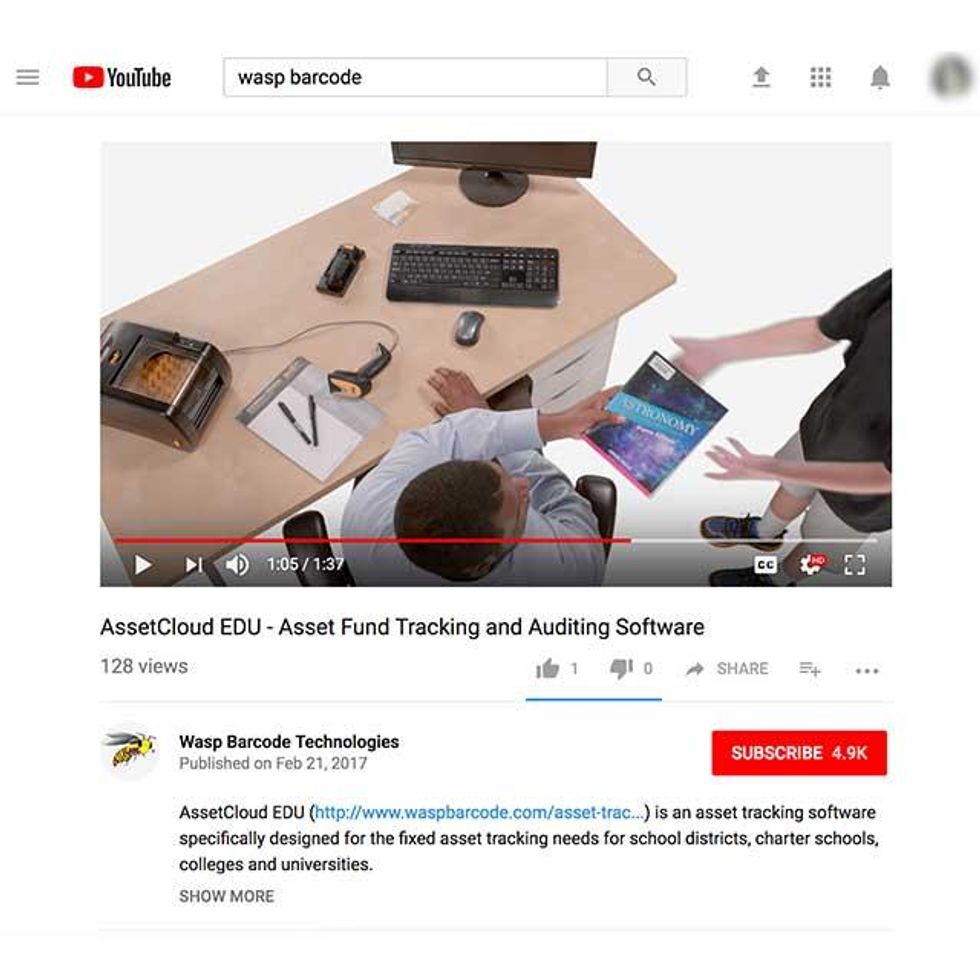
Image source: AssetCloud EDU – Asset Fund Tracking and Auditing Software
4. Influencer marketing
Never underestimate the power of trust—especially online. Trust is why influencers wield so much power.
But trust is also the biggest problem with influencer marketing. Consumers know these social media stars get paid to promote stuff. Clumsy promotions can take an internet celebrity down, and so smart influencers (the best influencers) are choosy about which brands they work with, and how they work with them.
This isn’t a bad thing for small businesses. While smaller budgets usually mean you’ll have to work with “micro-influencers,” that might end up being a good thing. It will mean you’ll have to dig a little deeper to find your ideal influencer, but if there’s a true match with your company and them (and their audience), you might have found yourself a high-value, long-term partnership.
5. Augmented reality
This one I’m a little skeptical about for small businesses. But…if you want an idea of how this might work, download IKEA’s “Place” app and fiddle around with it. The app lets you place any piece of IKEA furniture into your home (or into the middle of the street if you want).
While I am cautious about how many small businesses could create an app like this, consider how well some small businesses did with the Pokemon Go craze. You don’t necessarily have to build your own app to make augmented reality work.
Conclusion
One thing stands out to me after studying all these trends: Social media isn’t going to slow down. But if you stick to what works 70% of the time, run careful tests 20% of the time, and take genuine risks for the remaining 10%, I think there’s a good way to stay current without damaging your results.
For my two cents, I’d add one more trend to this list: user-generated content. I think the more we can get our audiences and customers to participate, the better. It is “social” media after all. It’s ultimately about people.
RELATED: 5 Surprising Facts About Small Business Marketing
The post 5 Hot Social Media Trends Every Marketer Should Be Aware Of appeared first on AllBusiness.com
The post 5 Hot Social Media Trends Every Marketer Should Be Aware Of appeared first on AllBusiness.com. Click for more information about Brian Sutter.
from neb biz feed 1 http://ift.tt/2EvnMhj
via Nebula Biz Local Loans
Subscribe to:
Posts (Atom)